Comparing the Best At-Home Gut Microbiome Test Kits

Gut Microbiome Test Comparison: Best & Most Comprehensive Options
Best Microbiome Test Kit 2026: At-Home Gut Tests Compared
An at-home gut microbiome test analyses a stool sample to describe the bacteria, and sometimes fungi, viruses and microbial genes, living in your digestive tract. If you are asking what the best microbiome test kit is, the honest answer is that there is no single best option for everyone. The right kit depends on what you want to learn, how much detail you need, how you feel about subscriptions and data privacy, and whether you are trying to diagnose symptoms or simply understand your gut better.
This guide compares the leading at-home gut microbiome tests, explains how to judge accuracy and methodology, and helps you choose a test that matches your goal rather than the boldest marketing claim.
What At-Home Gut Microbiome Testing Can and Cannot Show
Most reputable services can:
- Describe the microorganisms detected in your sample and estimate their relative abundance.
- Report diversity measures that are often used as a general indicator of gut microbial variety.
- Provide functional information, such as which microbial genes or pathways are present, when shotgun metagenomics or RNA-based methods are used.
- Offer general dietary, lifestyle or supplement suggestions based on your results.
They generally cannot:
- Diagnose conditions such as irritable bowel syndrome, inflammatory bowel disease, celiac disease or small intestinal bacterial overgrowth.
- Prove that a particular microbe is causing your symptoms.
- Produce results that are directly comparable between different companies, because labs use different methods, reference databases and scoring systems.
- Replace medical assessment when symptoms are persistent, severe or unexplained.
Are At-Home Microbiome Tests Accurate?
They can be technically reliable at describing what is present in a sample when the laboratory uses validated methods and accredited processes. The bigger limitation is interpretation. Microbiome composition fluctuates from day to day, different labs can produce different results from the same sample, and relatively few direct-to-consumer tests have published peer-reviewed validation for clinical decision-making.
In practice, at-home testing is best used for curiosity, general direction and tracking trends over time rather than for diagnosing or ruling out disease. If you want a clinical answer, a clinician-ordered stool test for specific markers such as inflammation or infection is often more useful than a broad microbiome report.
Why People Compare Gut Microbiome Tests
Most people who order a kit are trying to make sense of something specific:
- Ongoing bloating, gas or changes in bowel habits.
- Interest in personalised nutrition rather than generic advice.
- A wish to track how diet, travel, medication or stress affect their gut over time.
- Curiosity about whether probiotic or supplement recommendations can be tailored to their own results.
- A search for the most advanced or most comprehensive test on the market.
Signs often described as an unhealthy gut, such as bloating, irregular bowel habits, fatigue or skin changes, are nonspecific and overlap with many other conditions. A test can be an interesting additional data point, but it is not a substitute for talking to a clinician if something feels wrong.

Comparing the Leading At-Home Gut Microbiome Test Kits
How We Compare Microbiome Tests
Because companies rarely publish side-by-side validation data, the fairest way to compare kits is by the criteria you can actually verify:
- Testing method: 16S rRNA sequencing, shotgun metagenomics, RNA-based transcription analysis or a combination.
- What is reported: species lists, diversity scores, functional pathways, inflammatory markers or proprietary gut health scores.
- Laboratory credentials: whether the lab is accredited and whether validation data has been published or independently reviewed.
- Actionability: whether recommendations are specific and evidence-informed, or generic food and supplement lists.
- Cost model: one-time purchase, subscription, retest fees and bundled family options.
- Privacy and data handling: who owns the sample data, whether it is shared or sold, and whether you can request deletion.
- Support: access to clinicians, dietitians or responsive customer service.
Viome
Viome uses RNA-based analysis to look at microbial gene activity and functional pathways rather than only listing which bacteria are present. Reports focus on how the microbiome may be influencing digestion, inflammation and nutrient production, and are paired with personalised food and supplement suggestions through a subscription. Strength: a functional, detailed view of the gut. Limitation: the scoring systems and recommendations are proprietary, and independent peer-reviewed validation of the personalised advice is limited.
Tiny Health
Tiny Health uses 16S rRNA sequencing with a strong focus on families, including infant and child gut health. Reports highlight specific microbes and are designed to be reviewed alongside practitioner support. Strength: useful for parents who want a structured way to track a child's gut development. Limitation: infant and early-childhood microbiome interpretation is still an emerging research area, so results should be treated as directional.
Thryve
Thryve offers 16S-based composition reporting together with dietary suggestions and matched probiotic recommendations. Strength: accessible reporting and an ongoing-management approach. Limitation: evidence that matching a probiotic to a microbiome report improves outcomes is still limited, so supplement suggestions are best viewed as optional.
Ombre
Ombre positions itself as a more affordable 16S-based option that reports on specific species and generates a gut health score with dietary suggestions. Strength: lower entry cost. Limitation: the score is proprietary, so it cannot be compared with another company's score or interpreted like a clinical result.
ZOE and DayTwo
These are broader nutrition programmes rather than pure microbiome tests. They combine microbiome data with blood markers such as glucose and lipid responses to produce personalised nutrition guidance. Strength: a more holistic picture of how food affects your body. Limitation: they answer questions about diet and metabolic response more than about gut bacteria alone.
GI-MAP and Clinician-Ordered Stool Tests
GI-MAP and similar clinician-ordered stool tests are not direct-to-consumer microbiome kits in the same sense. They are typically used by practitioners to look for specific markers such as pathogens, parasites, inflammation or digestive function. Strength: they can answer targeted clinical questions. Limitation: they usually require a practitioner to order and interpret them, and they do not provide the same broad microbial community profile as a sequencing-based microbiome test.
At-a-Glance Comparison: Best for Specific Needs
Pricing changes frequently, so always check the provider's current site before ordering. As a rough guide, entry-level one-time stool kits are usually the least expensive, mid-range kits with more detailed reporting sit in the middle, and subscription services that include personalised recommendations and periodic retesting cost the most.
If your priority is:
- A low-cost starting point: entry-level 16S kits that report composition and diversity.
- Functional detail and personalised food suggestions: services using RNA-based analysis or shotgun metagenomics, such as Viome.
- Family or infant gut tracking: kits with dedicated child reporting and practitioner support, such as Tiny Health.
- Probiotic matching and ongoing management: 16S services with supplement suggestions, such as Thryve.
- Affordable species-level reporting: lower-cost 16S options such as Ombre.
- Nutrition and metabolic response: broader programmes such as ZOE or DayTwo.
- Clinical symptoms or targeted markers: a clinician-ordered stool test such as GI-MAP, rather than a direct-to-consumer microbiome kit.
If you have persistent digestive symptoms, a clinician-ordered stool test for specific markers is often more useful than a direct-to-consumer microbiome kit, because those tests are designed to answer clinical questions.
What Happened to uBiome?
uBiome was one of the best-known early at-home gut testing companies and its SmartGut test was widely discussed. In 2019 its operations were suspended following an FBI investigation, and the company subsequently filed for bankruptcy; its founders were later charged with fraud. uBiome is no longer a realistic option, but the episode remains a useful reminder to check who operates the laboratory, whether it is accredited, how your sample data is used, and whether accuracy claims have been independently validated.

Gut Microbiome Test Comparison: Best & Most Comprehensive Options
How to Choose the Best At-Home Gut Microbiome Test Kit
Start With the Question You Want Answered
The best kit depends entirely on what you are trying to learn:
- General curiosity or a baseline snapshot: a straightforward 16S composition test is usually enough.
- Deeper functional insight: look for shotgun metagenomics or RNA-based analysis.
- Personalised nutrition guidance: consider programmes that pair microbiome data with other measurements.
- Specific digestive symptoms: speak to a clinician first, since targeted stool testing may be more informative than a broad microbiome report.
Compare Methodology, Not Marketing
The three methods you will see most often are not equivalent:
- 16S rRNA sequencing identifies and counts broad groups of bacteria. It is cost-effective and widely used, but it does not capture fungi, viruses or gene activity.
- Shotgun metagenomics sequences all microbial DNA in the sample, offering species-level and functional detail at a higher cost.
- RNA-based analysis, also called metatranscriptomics, looks at microbial gene activity, which changes over time and can be harder to interpret.
Scores such as gut health score or diversity index are created by each company and are not standardised. A high score from one provider does not mean the same thing as a high score from another.
A Practical Checklist Before You Buy
- Is the laboratory accredited, and is the testing method clearly described?
- Is there published or independently reviewed validation data for the test?
- Does the report tell you what is measured and what each result does and does not mean?
- Are recommendations specific enough to act on, or are they generic food lists?
- Is it a one-time purchase or a subscription, and what does a retest cost?
- What does the privacy policy say about sharing, selling or deleting your data?
- Is there access to a clinician or dietitian if you have questions about your results?
How to Use a Gut Microbiome Testing Kit Correctly
Sample quality affects results, so follow the instructions closely:
- Read the collection guide before you start and prepare the sample exactly as described.
- Avoid antibiotics, probiotics and major diet changes before sampling where the kit advises it, often around one week, and longer after antibiotics. Do not stop a prescribed medication without speaking to your doctor first.
- Collect the sample at a consistent time of day and store or ship it according to the kit's temperature and timing instructions.
- Note any recent illness, travel, medication or dietary changes, since these help explain unusual results.
Testing under consistent conditions makes any repeat test far more meaningful than a single result taken at random. If you plan to compare before and after, use the same kit and similar timing.
Interpreting Your Microbiome Test Results Realistically
What Typical Reports Include
Most reports contain some combination of the following:
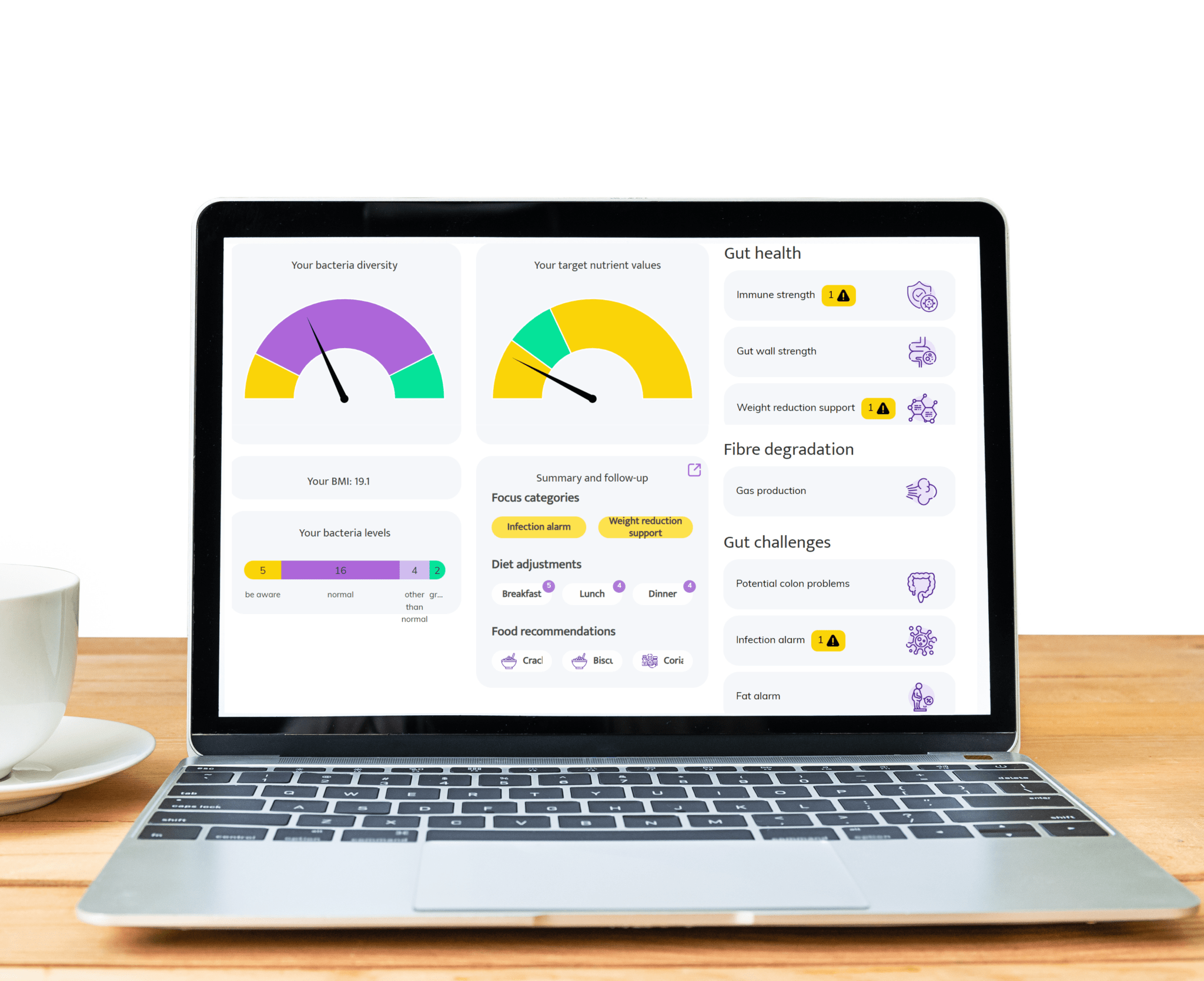
- Diversity measures describing how varied your microbial community appears.
- Relative abundance of bacterial groups or species, often compared with the company's own reference database.
- Presence of organisms the company classifies as beneficial or of potential concern.
- Functional information such as microbial pathways, when advanced methods are used.
- Personalised food, fibre or supplement suggestions.
Two things are worth keeping in mind. First, high and low usually mean high or low relative to that company's database, not to a universal clinical standard. Second, a single sample is a snapshot of a community that shifts with diet, sleep, stress, illness and medication.
Turning Results Into Useful Next Steps
Recommendations vary by provider, but the changes that tend to be supported by broader research are unglamorous:
- Eat a wider variety of plant foods, including vegetables, fruit, legumes, wholegrains, nuts and seeds.
- Include fermented foods such as yoghurt, kefir, kimchi or sauerkraut if you tolerate them; controlled research suggests fermented-food diets can be associated with greater microbial diversity.
- Keep fibre intake steady rather than making abrupt, extreme changes.
- Treat elimination diets suggested by an automated report with caution, and discuss them with a clinician or dietitian before cutting out major food groups.
- Avoid expecting any single drink, food or supplement to heal your gut. No product does that on its own.
There is no official list of three super foods for gut health, and no drink can heal the gut by itself. A more useful framework is to focus on three categories: a wide range of plant foods, fermented foods you tolerate, and fibre-rich foods that suit your digestion.
If you plan to track progress, retest with the same kit after a few months so the comparison is at least methodologically consistent.
Is a Microbiome Test Worth It?
For many people it is a reasonable educational tool rather than a medical necessity. It may be worth the cost if you want a baseline, plan to track changes over time, and are willing to act on general diet and lifestyle insights. It is probably not worth it if you are hoping for a diagnosis, if you have persistent or worrying digestive symptoms, or if the cost would be better spent on a consultation with a gastroenterologist or dietitian. Test results are one input among many, not a verdict on your health.

Common Questions About At-Home Gut Microbiome Testing
What is the best gut microbiome test?
There is no single best kit, because the right choice depends on your goal and the evidence behind the provider. For affordability, entry-level 16S composition tests are usually sufficient. For the most detailed functional picture, services using shotgun metagenomics or RNA-based analysis go further. For families, kits with dedicated infant and child reporting are more relevant. Whichever you choose, prioritise an accredited laboratory, a clearly described method, genuinely useful reporting and a transparent privacy policy.
Which gut microbiome test is the most advanced?
Advanced usually means higher-resolution or functional data. RNA-based analysis and shotgun metagenomics provide more detail than standard 16S sequencing because they look at microbial gene activity or all microbial DNA. That extra detail does not automatically make a test clinically better. It can still be difficult to interpret, and more data does not always lead to better decisions.
Are gut microbiome tests legitimate?
Yes, legitimate providers exist, and the underlying sample analysis is real science. The limitations lie mainly in interpretation and in how confidently results can be linked to symptoms. The uBiome collapse showed that a company can fail commercially and face fraud charges without invalidating the technology itself, but it is a good reason to check credentials, published validation and data policies before ordering from anyone.
Will insurance pay for a gut microbiome test?
Direct-to-consumer wellness kits are usually not covered by insurance, because they are not ordered to diagnose or treat a condition. Some clinician-ordered stool tests for specific markers may be covered when they are medically indicated. Coverage varies by plan and country, so check with your insurer, and ask the provider whether the kit is eligible for a health savings or flexible spending account.
How can I test my gut health at home?
You have a few options: a direct-to-consumer microbiome kit that analyses a stool sample, a clinician-ordered stool test for specific markers such as inflammation or infection, or a targeted at-home test for a particular condition. If symptoms are ongoing, the clinician-ordered route is generally the more informative starting point.
What are the signs of an unhealthy gut?
Signs commonly mentioned include bloating, excess gas, abdominal discomfort, changes in bowel habits, fatigue and skin changes. These are nonspecific. They overlap with many conditions and are not diagnostic on their own. Persistent or severe symptoms deserve medical assessment rather than self-testing alone.
Do I need to stop probiotics or antibiotics before testing?
Most kits ask you to avoid probiotics and major diet changes for roughly a week before sampling, and to wait longer after a course of antibiotics. Follow the instructions included with your kit, and speak to your doctor before pausing any prescribed medication.
Choosing Your Next Step
Start by writing down what you actually want to know, then choose the method that answers that question rather than the kit with the boldest claims. Check the laboratory's credentials and the provider's data policy, follow the collection instructions carefully, and treat the report as one useful signal alongside how you feel, how you eat and what your clinician advises. Used that way, at-home gut microbiome testing can be a genuinely helpful part of managing your digestive health, as long as its limits are clear from the start.
Find more details about Gut Microbiome Test Comparisons
You can find more information on the related topics below.
Read more: comparing the best at-home gut microbiome test kits
Your Gut Has a Story. Read It — Then Fix Potential Problems
Full microbiome sequencing + Gut Health Index. Metabolic pathways, diversity, keystone species. Personalized plans available (diet, supplements, diary, recipes). EU lab + Maastricht University spin-off + GDPR-safe.