How Gut Testing Works: Technologies, Accuracy and ISO-Certified Labs

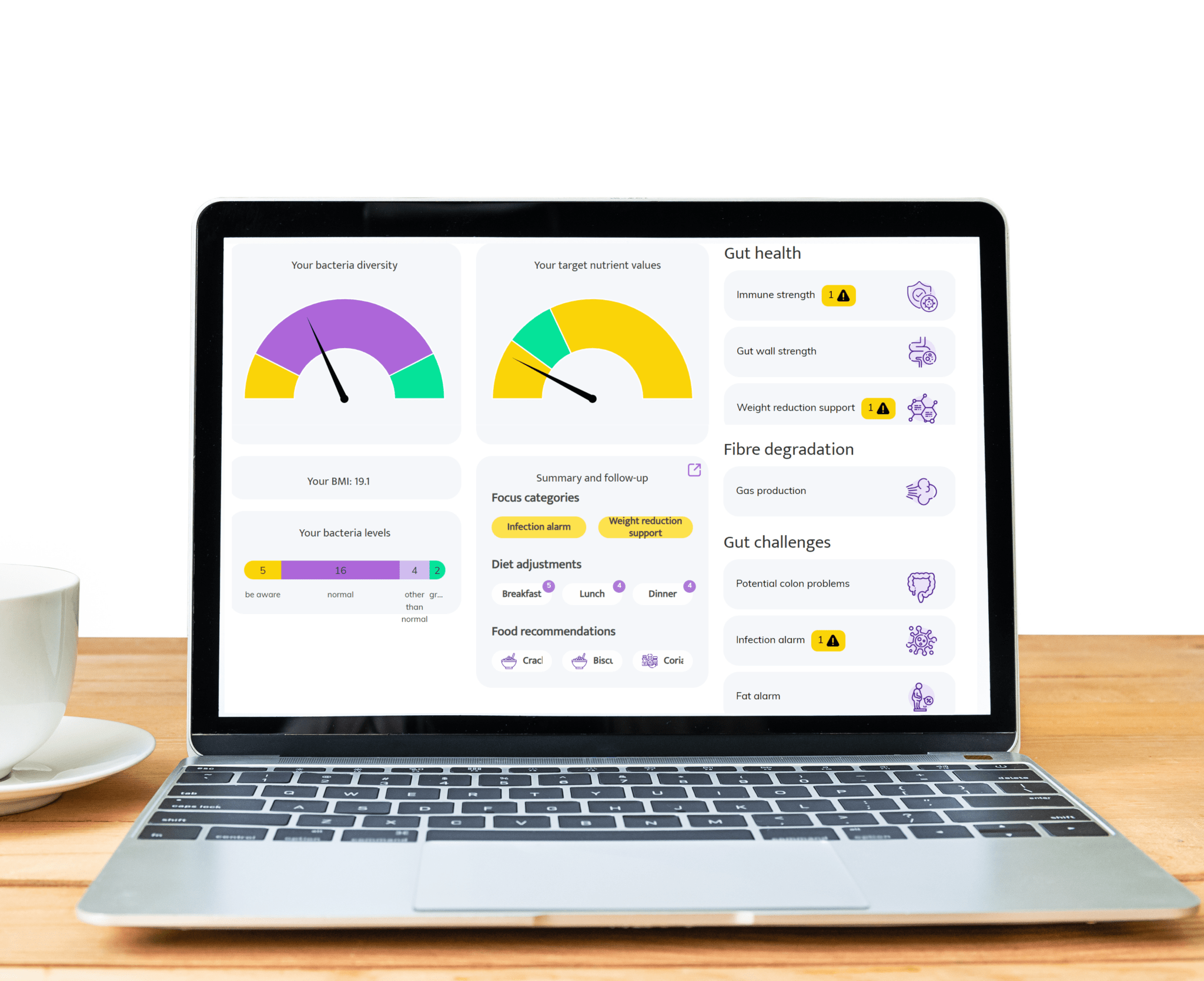
Microbiome Testing Technology: How Gut Tests Map Functional Pathways
Gut Testing Technology: What a Microbiome Test Can and Cannot Tell You
If you are comparing gut tests, the technology and laboratory behind the report matter as much as the marketing claims. Gut microbiome testing can provide useful, reproducible information when it is performed by a competent laboratory and interpreted within the limits of current science. It cannot diagnose most health conditions on its own or predict exactly how you will respond to a treatment.
No single gut test measures everything. Some tests give a broad overview of bacterial groups, while others target specific organisms or genes. A useful test should explain what it measured, how the sample was processed, and what the results can and cannot mean for your health.
What Gut Microbiome Testing Measures
- Microbial composition: which bacteria and other microorganisms are present.
- Diversity: how varied the microbial community is.
- Relative abundance: the proportion of different organisms in the sample.
- Functional potential: genes or pathways that may influence digestion, immunity and metabolism.
- Targeted markers: specific organisms or molecules linked to a defined question.
How Gut Tests Work
Most gut microbiome tests follow a similar path:
- Sample collection: you provide a stool sample using the instructions provided with the test kit.
- DNA extraction: the laboratory isolates microbial DNA or other molecules from the sample.
- Laboratory analysis: the lab uses methods such as qPCR, 16S sequencing or shotgun metagenomics.
- Bioinformatics: software classifies organisms and compares patterns with reference data.
- Reporting: results are summarised, ideally with context about limitations and next steps.
The quality of each step matters. A weak sample, inconsistent lab method or overconfident interpretation can make even advanced technology less useful.
At-Home vs Clinical Gut Testing
At-home tests are convenient and usually collect a stool sample that you send to a laboratory. Clinical tests are ordered by a healthcare professional and may include additional context, such as symptoms, medical history and follow-up. The technology inside the tube can be similar, but the surrounding interpretation, privacy rules and insurance pathways often differ. A direct-to-consumer test may be useful for general exploration, while a clinician-ordered test may be more appropriate when symptoms need medical assessment.
What Gut Testing Cannot Do
Gut microbiome testing is not a stand-alone diagnostic tool for most health conditions. It cannot currently tell you that you have a specific disease, predict exactly how you will respond to a treatment, or replace evaluation by a healthcare professional. Research suggests that microbiome patterns are associated with various health states, but association does not prove cause and effect.

Comparing Gut Testing Technologies
When evaluating a gut test, look beyond the marketing name and ask what technology the laboratory actually uses. The main methods differ in resolution, cost, speed and the type of information they provide.
qPCR and Targeted Testing
qPCR, or quantitative polymerase chain reaction, measures specific DNA sequences. It is fast, sensitive and useful for detecting or quantifying predefined organisms or genes.
- Pros: quick, cost-effective, good for targeted questions.
- Limitations: only reports what the test is designed to look for; it does not profile the whole microbiome.
16S rRNA Sequencing
16S rRNA sequencing analyses a conserved bacterial gene that helps classify bacteria. It is widely used for broad bacterial community profiling.
- Pros: useful for comparing bacterial composition and diversity.
- Limitations: usually provides genus-level information, has limited fungal or viral coverage, and may not show what microbes are actually doing.
Shotgun Metagenomics
Shotgun metagenomics sequences much of the DNA in a sample. It can provide species-level and functional information, including genes associated with metabolism, immunity and potential pathways.
- Pros: higher resolution and broader functional insight than 16S sequencing.
- Limitations: more expensive, more computationally demanding, and still dependent on reference databases and interpretation.
Metatranscriptomics, Metabolomics and Multi-Omics
Metatranscriptomics looks at RNA to estimate which microbial genes are active at the time of sampling. Metabolomics measures small molecules produced by microbes or host-microbe interactions. When combined with genomics or transcriptomics, these approaches can be combined into multi-omics.
- Pros: can offer a more functional view of the gut ecosystem.
- Limitations: findings may be difficult to interpret, standardised clinical thresholds are often lacking, and more research is needed.
How to Compare Technologies
No method is automatically best for every purpose. A targeted qPCR panel may be the most practical choice for a specific question, while shotgun metagenomics may suit research that needs broad functional detail. Use these questions to compare methods:
- What question is the test designed to answer?
- Does it report composition only, or also functional potential?
- Is the resolution genus-level, species-level or strain-level?
- How does the laboratory validate accuracy and limits of detection?
- Are limitations explained clearly in the report?
For consumer testing, the more important questions are often whether the laboratory validates its methods, reports limitations clearly and avoids overstating what the results mean.
What ISO Certification Means in Microbiome Testing
ISO certification is a sign that a laboratory has met defined quality management or competence standards. In testing laboratories, ISO/IEC 17025 is especially relevant because it addresses technical competence, impartiality and consistent operation. For microbiome testing, that can mean documented procedures, trained staff, equipment calibration, quality control checks and traceability from sample to report.
ISO certification does not guarantee that every test result is clinically meaningful. It does, however, support confidence that the laboratory has systems in place to produce reliable, reproducible data within the scope of its accreditation.
Other Laboratory Credentials to Check
In some countries, clinical laboratories may also hold CLIA certification or CAP accreditation. These cover different aspects of laboratory quality and regulatory compliance. ISO/IEC 17025 focuses on technical competence and impartiality for testing and calibration laboratories. If a provider mentions certification, ask which standard applies and what part of the workflow is covered.

Microbiome Testing Technology: How Gut Tests Map Functional Pathways
Accuracy, Limitations and How to Judge a Gut Test
Do Gut Tests Really Work?
Gut microbiome tests can work well as tools for description, research and comparison when they are performed by a competent laboratory and interpreted within the limits of current science. They are not perfect diagnostic tools. Results can vary because of sample timing, diet, medications, collection method and the technology used. In practice, a gut test is most useful when it is paired with a clear question and qualified interpretation.
Why Gut Test Results Can Differ
- A single sample captures one point in time.
- Diet, stress, sleep, antibiotics and travel can influence the microbiome.
- Different labs may use different methods, databases and reporting scales.
- Some tests report relative abundance, not absolute numbers.
- Interpretation can vary if clinical context is missing.
What Makes a Gut Microbiome Test More Credible
- Clear information about the technology used.
- Accreditation or certification relevant to the tests offered.
- Validation data, quality controls and limits of detection.
- Transparent reporting of uncertainty and limitations.
- Qualified support for interpreting results.
- Realistic claims rather than promises to diagnose or cure conditions.
Are Gut Microbiome Tests Legit?
Reputable gut microbiome tests can be legitimate tools for exploration, research and some clinical contexts, especially when ordered or interpreted by a healthcare professional. They are less reliable as a do-it-yourself diagnostic for complex symptoms. A test result should be treated as one piece of information, not a final answer.
Which Gut Microbiome Test Is the Most Advanced?
There is no single most advanced test for everyone. Shotgun metagenomics and multi-omics approaches currently offer the most detailed research-level information, while qPCR and 16S sequencing can be more practical for specific or routine questions. The better question is whether a test technology fits its intended purpose and whether the laboratory can demonstrate accuracy and quality.
How Microbiome Testing May Be Used
Research suggests the gut microbiome is associated with digestive health, immune function, metabolism and the gut-brain axis. Microbiome testing may support:
- Personalised nutrition exploration, alongside professional guidance.
- Research into conditions such as irritable bowel syndrome (IBS) or inflammatory bowel disease (IBD).
- Studies of microbial diversity and potential functional pathways.
- Monitoring in research or clinical trial settings.
Gut testing does not replace medical evaluation, and it should not be used to self-diagnose or self-treat digestive, immune or mental health conditions.
Signs Often Linked to Poor Gut Health
There is no fixed medical list of seven signs of an unhealthy gut, and symptoms can have many causes. Commonly discussed signs that may prompt a conversation with a healthcare professional include:
- Persistent bloating, gas or abdominal discomfort.
- Constipation, diarrhoea or alternating bowel habits.
- Unexplained fatigue or low energy.
- Skin irritation or flare-ups that appear connected to digestion.
- Sleep disturbance or mood changes.
- Frequent digestive upset after meals.
- Unintentional weight changes or poor appetite.
These signs are not specific to the microbiome. If symptoms are persistent, severe or worrying, seek medical advice rather than relying on a gut test alone.
How to Choose a Gut Test
Choosing a gut test is easier when you compare the practical details rather than the boldest claim.
1. Define What You Want to Learn
A test may be used for general curiosity, nutritional exploration, research participation or a specific clinical question. Different goals call for different technologies and levels of support.
2. Check the Laboratory and Certification
Look for clear information about the laboratory, its accreditation and the scope of its certification. ISO/IEC 17025 accreditation is particularly relevant for testing laboratories. If a company claims certification, it should explain which parts of its workflow are covered.
3. Review the Technology and Report
Check whether the test uses qPCR, 16S sequencing, shotgun metagenomics or another method. The report should tell you what was measured, how results are compared, and what the limitations are.
4. Consider Cost, Insurance and Turnaround Time
Gut microbiome tests are often paid for out of pocket, especially when used for general wellness. Insurance coverage varies by country, insurer and reason for testing. In some cases, a clinician-ordered test for a specific medical question may be covered, but many direct-to-consumer microbiome tests are not. Check costs, shipping fees, repeat-test policies and expected turnaround time before ordering.
5. Look for Support and Privacy Protections
Interpretation support matters. A credible provider should be clear about data privacy, sample handling, and who can help you understand results. If a result suggests a medical concern, follow up with a qualified healthcare professional.
How to Compare Gut Test Companies
There is no single best microbiome company for everyone. The most trustworthy providers are usually the ones that explain their methods, acknowledge uncertainty and avoid promising diagnoses or cures. Compare companies on transparency, laboratory standards, scientific evidence, independent validation and customer support rather than on the number of microbes they claim to detect.

The Future of Gut Testing Technology
Gut testing is likely to become more useful as laboratory methods, reference databases and interpretation tools improve. Several directions may shape the next phase of microbiome testing.
Better Standardisation
International standards, reference materials and shared reporting frameworks can make results more comparable between laboratories. This is important because a microbiome result is only as useful as the context used to interpret it.
Artificial Intelligence and Machine Learning
AI and machine learning may help identify patterns in complex microbiome data, but they do not remove the need for validation. Models must be trained on diverse, well-characterised populations and tested before they can support clinical decisions.
More Integrated Clinical Use
Microbiome testing may eventually support earlier detection, treatment monitoring or personalised care in selected conditions. For now, most clinical use remains cautious and should be combined with standard medical assessment.
New Microbiome-Based Interventions
Research continues into probiotics, prebiotics, dietary approaches and other microbiome-targeted interventions. The evidence base varies widely by product and health outcome, so claims should be evaluated carefully.
Quick Checklist Before You Buy a Gut Test
- Is the laboratory accreditation and scope clearly stated?
- Does the report explain what was measured and what the limitations are?
- Is the technology matched to your question?
- Are costs, shipping, turnaround and privacy policies transparent?
- Is interpretation support available if results raise concerns?
Bottom Line
Gut testing technology can provide meaningful insights into the composition and potential function of the gut microbiome, especially when the laboratory uses validated methods and reports limitations clearly. ISO-certified laboratories and standards such as ISO/IEC 17025 can support confidence in how samples are handled and analysed, but certification is not the same as a clinical diagnosis.
If you are considering a gut test, start with a clear question, compare the technology and laboratory credentials, ask about cost and insurance, and use the results as one part of a broader conversation with a qualified healthcare professional.
Find more details about Gut Testing Technology
You can find more information on the related topics below.
Read more: How to Compare Gut Tests, Accuracy and ISO-Certified Labs
Your Gut Has a Story. Read It — Then Fix Potential Problems
Full microbiome sequencing + Gut Health Index. Metabolic pathways, diversity, keystone species. Personalized plans available (diet, supplements, diary, recipes). EU lab + Maastricht University spin-off + GDPR-safe.