Comprehensive Stool Microbiome Testing: What It Can Tell You About Your Gut

Why People Buy a Gut Health Test: Microbiome Testing Guide
What Is a Stool Microbiome Test?
A stool microbiome test analyses the microorganisms found in a stool sample. Because the gut holds the largest and most diverse microbial community in the body, stool is one of the most informative samples for understanding what is living in the digestive tract.
The microbiome is the collective genetic material of those microorganisms; the microbiota is the community of organisms themselves. Research suggests the gut microbiota contributes to digesting food, producing certain vitamins and short-chain fatty acids, shaping immune development, and communicating with the nervous system through what is often called the gut–brain axis. That is why interest in stool testing has grown so quickly.
Why Stool Rather Than Blood or Saliva?
- Stool is collected non-invasively, without needles or sedation.
- It reflects microbial communities from across the digestive tract, not just one location.
- Sequencing methods can detect organisms that traditional stool cultures cannot grow in the laboratory.
Blood and saliva samples answer different questions and are not a substitute when the goal is to describe the gut microbial community.
What a Stool Microbiome Test Measures
- The types and relative abundance of bacteria present
- Overall microbial diversity
- The presence of certain organisms, including some pathogens
- Functional potential — genes linked to specific metabolic pathways
- In some tests, yeasts, parasites or markers of intestinal inflammation
The exact output depends on the technology used, which is why two providers can return surprisingly different reports from the same sample.
Why People Buy a Gut Health Test
Most people order one for a practical reason: ongoing bloating, gas or irregular bowel habits; curiosity about how their diet and lifestyle are shaping their gut; a wish to track the effect of a probiotic, a fibre supplement or an elimination diet; or a desire for more personalised nutrition guidance.
It helps to set expectations early. A stool microbiome test can describe the composition and functional potential of your gut community. It cannot diagnose irritable bowel syndrome, inflammatory bowel disease or any other condition, and it does not replace medical assessment. Treat the report as one piece of information to discuss with a qualified healthcare professional.

How Stool Microbiome Testing Works
Laboratory methods have changed substantially over the past two decades. Traditional culture could only grow a small fraction of gut microbes in the lab, producing a narrow and often misleading picture. Sequencing-based methods work directly with microbial DNA, so they can detect organisms that will not grow on a plate.
16S rRNA Gene Sequencing
16S sequencing targets a gene present in all bacteria. Because that gene contains both highly conserved and variable regions, it can indicate which bacterial groups are present and roughly how abundant each one is. It is comparatively inexpensive and well suited to describing bacterial diversity and broad shifts in composition.
Its main limitation is resolution: 16S sequencing usually identifies bacteria at genus level rather than species level, and it does not describe fungi, viruses or microbial function.
Shotgun Metagenomics and Whole Genome Sequencing
Shotgun metagenomics sequences all the DNA in a sample rather than a single marker gene. This allows identification at species and sometimes strain level, and can also capture fungi, viruses and archaea. Because whole genes and pathways are read, metagenomics can indicate functional potential — for example, whether the community has the genetic capacity to produce particular short-chain fatty acids or to carry antibiotic-resistance genes.
Some providers use the term whole genome sequencing for a comparable approach. The trade-off is cost, data volume and interpretation complexity.
Functional Analysis and Bioinformatics
Once sequencing is complete, bioinformatics pipelines compare the reads against reference databases, estimate diversity and look for patterns associated with health or disease. This is where most of the interpretation happens — and where provider differences are largest, because reference databases, algorithms and reporting thresholds are not standardised across the industry.
How to Test Your Stool Microbiome at Home
You can check your stool microbiome at home with a mail-order kit. Collection is straightforward, but preparation affects how representative the result is:
- Order the kit and read the instructions before choosing a collection day.
- Follow any pre-test guidance. Many providers ask you to pause antibiotics, probiotics and certain supplements for a set period, because these can temporarily change what the sample shows.
- Collect a small sample with the supplied container or swab, avoiding contact with urine or toilet water.
- Seal, label and return the sample using the shipping method and timing specified.
- Wait for the report, which usually arrives within a few weeks.
What to Expect in the Report
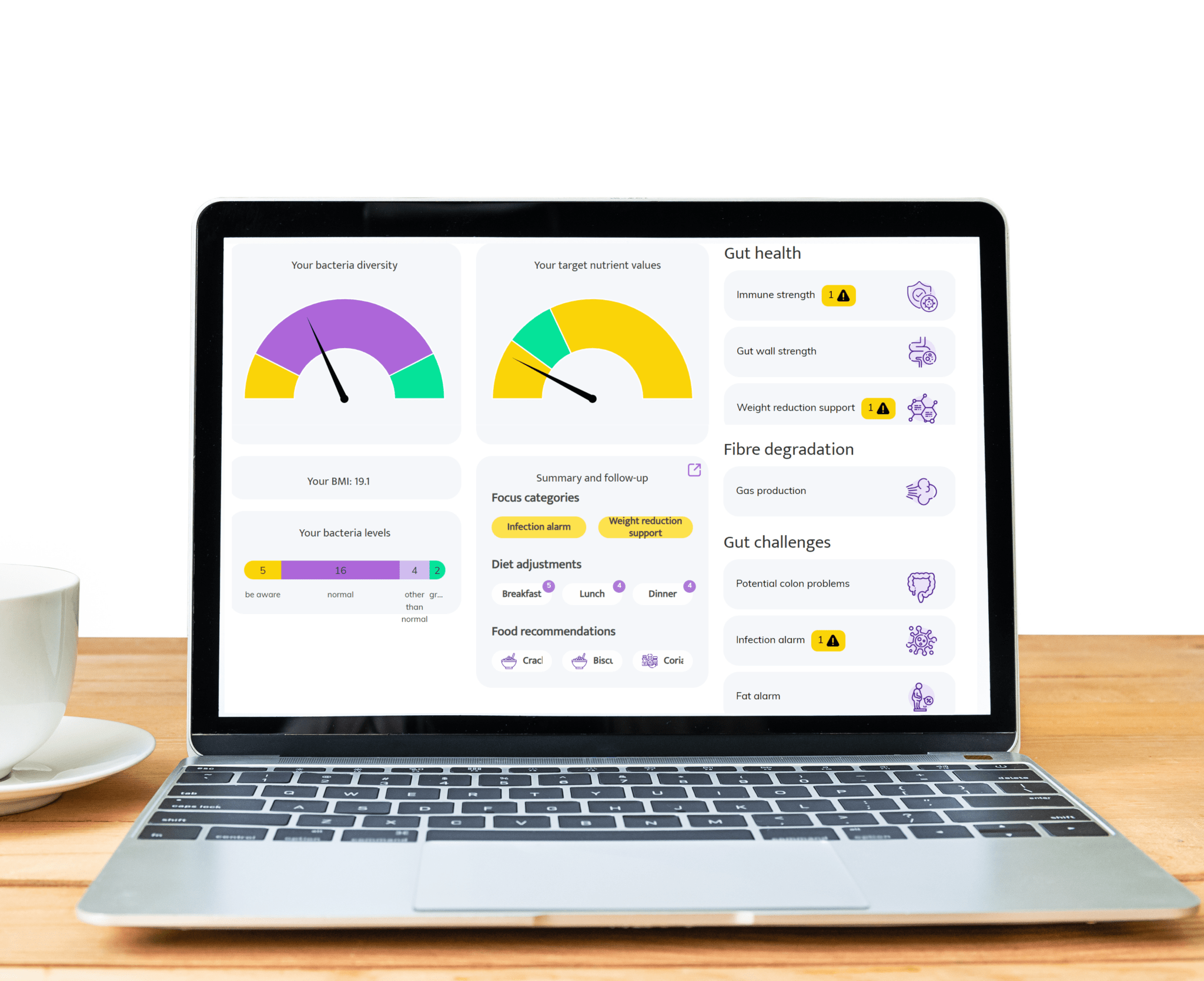
Reports vary widely. Most include a diversity score, a breakdown of major bacterial groups, a list of organisms flagged as beneficial or potentially concerning, and sometimes diet or supplement suggestions. Some providers include a consultation to walk through the findings.
Before ordering, check where the laboratory is accredited, which sequencing method is used, whether raw data are available to you, how the reference database is maintained, and what the provider claims the results can be used for. Marketing language that promises diagnosis or guaranteed treatment outcomes is a warning sign.

Why People Buy a Gut Health Test: Microbiome Testing Guide
What Your Stool Microbiome Results Can Show
Results generally describe patterns rather than pass-or-fail values. Knowing the vocabulary makes a report easier to read.
Diversity Metrics
Reports often include alpha diversity and beta diversity. Alpha diversity describes the richness and evenness of species within your own sample. Beta diversity compares your microbial community with a reference group. Higher diversity is often associated with a more resilient gut community, but the relationship is not straightforward, and diversity alone does not define health.
Key Microbial Groups
Reports typically highlight the relative abundance of major bacterial groups such as Bacteroidetes, Firmicutes, Actinobacteria and Proteobacteria, alongside specific genera or species of interest. Imbalances may be flagged, but high or low only has meaning relative to the reference population the provider uses — and those references differ between providers.
Functional Insights
Advanced tests also describe metabolic pathways and gene functions detected in the sample. These give an indication of what the community is genetically capable of, such as fibre fermentation or vitamin-related pathways. Functional predictions are informative but should not be read as a measurement of what is actually happening in your gut.
How Reliable Are Stool Microbiome Tests?
Stool microbiome tests can be genuinely useful research and educational tools, but most are not standardised diagnostic tests, and their results should be interpreted with care.
- There is no universally agreed reference range for a healthy microbiome, so results depend heavily on the provider's database and scoring system.
- A single sample is a snapshot. Diet, hydration, travel, medication and even recent bowel habits can shift results from one week to the next.
- Different laboratories and methods can produce different results from the same sample, which makes comparing tests over time difficult unless the same provider and method are used.
- Many reported associations between specific microbes and conditions come from observational studies. Association is not causation, and a microbial pattern linked to a disease in a study does not mean that pattern causes it in you.
- Consumer reports rarely diagnose anything on their own.
Some stool tests do have well-established clinical roles — for example faecal immunochemical testing, stool culture, PCR panels for specific pathogens, and faecal calprotectin for intestinal inflammation. Those are different from broad microbiome profiling.
If you have persistent or worrying symptoms such as blood in the stool, unexplained weight loss, fever or severe abdominal pain, seek medical advice rather than relying on a consumer test.
What Are the Signs of an Unhealthy Gut Microbiome?
There is no single symptom that proves your gut microbiome is out of balance. Clinicians and researchers typically look at a cluster of digestive and general symptoms that persist over time:
- Ongoing bloating, excessive gas or abdominal discomfort
- Diarrhoea, constipation, or alternating between the two
- Changes in stool consistency or frequency lasting more than a few weeks
- Fatigue, low mood or poor sleep, which have been associated with gut microbial patterns in some studies
- Frequent infections, skin flare-ups or new food intolerances
- Recent courses of antibiotics, a gastrointestinal infection, or a major change in diet
These symptoms have many possible causes, including infections, food intolerances, medication side effects, stress and underlying digestive conditions. They are not specific to the microbiome and should not be used for self-diagnosis. Persistent symptoms are a reason to see a healthcare professional, not a reason to assume dysbiosis.
How to Improve Your Gut Microbiome
Microbiome change is generally gradual and habit-driven. The interventions with the most consistent supporting evidence are ordinary ones.
Build Diet Diversity
- Eat a wide range of plant foods across the week. Different fibres feed different microbes.
- Include fermented foods such as yoghurt with live cultures, kefir, sauerkraut and kimchi if you tolerate them.
- Add polyphenol-rich foods such as berries, nuts, olive oil, coffee and tea.
- Keep ultra-processed foods and added sugar moderate rather than eliminating them entirely.
Consider Probiotics and Prebiotics Selectively
Certain probiotic strains have evidence for specific uses, such as reducing antibiotic-associated diarrhoea, but effects are strain-specific and vary between individuals. Prebiotic fibres and fermented foods may support a more diverse community. If you are immunocompromised or seriously unwell, speak to a clinician before starting supplements.
Work on the Everyday Factors
- Prioritise sleep and manage chronic stress where you can.
- Stay physically active — regular movement has been associated with a more diverse microbiota.
- Avoid unnecessary antibiotics and discuss stewardship with your prescriber.
- Limit alcohol, which can disrupt the gut barrier and microbial balance.
- Do not smoke.
Be Cautious With
- Long, restrictive elimination diets without professional guidance
- Microbiome reset programmes that promise rapid, permanent change
- Repeated testing in quick succession, which mostly captures normal fluctuation
How Long Does It Take to Correct Your Gut Microbiome?
Timelines vary by person and by what you change. As a rough guide:
- Days to a few weeks: dietary changes such as increasing fibre or fermented foods can shift composition and function measurably.
- Four to twelve weeks: sustained changes in diet, sleep or activity are usually needed before differences are stable enough to show up on a follow-up test.
- Three to twelve months or longer: recovery after a course of antibiotics or a gastrointestinal infection, because the community often rebounds gradually and may not return exactly to its previous state.
- Ongoing: maintenance habits matter more than any single intervention. Microbiome composition tends to drift back towards its earlier pattern once new habits stop.
If you plan to retest, most providers suggest waiting around eight to twelve weeks after a deliberate change so that normal day-to-day variation does not obscure a real trend.

How to Choose a Stool Microbiome Test
If you decide a test is worth it, compare providers on substance rather than marketing:
- Method: 16S is cheaper and broader in coverage but less detailed; shotgun metagenomics gives species-level and functional data at a higher price.
- Accreditation: check that the sequencing laboratory meets recognised quality standards.
- Reference data: ask how the comparison database is built and how often it is updated.
- Raw data: having access to your own sequencing data lets you or a clinician reinterpret it later.
- Support: is a qualified professional available to explain the results?
- Privacy: confirm how your sample data are stored and whether they may be used for research.
- Claims: prefer providers that are clear about what testing can and cannot tell you.
The Future of Stool Microbiome Testing
Combining Microbiome Data With Other Measurements
Research increasingly combines microbiome profiling with metabolomics, proteomics and host genomics. Integrating these layers may give a more complete picture of how microbes interact with human biology than microbiome data alone.
Artificial Intelligence and Machine Learning
Machine learning is being applied to large microbiome datasets to look for patterns that predict disease risk or treatment response. These approaches are promising, but most are still at the research stage and require validation before they can guide individual care.
Microbiome-Directed Therapies
Therapies such as faecal microbiota transplantation, defined-strain probiotics and microbiome-modifying drugs are being refined, and testing may eventually help identify who is most likely to benefit. Outside specific clinical indications, faecal microbiota transplantation is not a routine treatment.
Wider Access
As sequencing costs fall and reporting improves, stool microbiome testing is likely to become more accessible. Better public understanding of what the results do and do not mean will matter as much as the technology itself.
What to Take Away
A stool microbiome test offers a detailed, non-invasive view of the microbial community in your gut. That information can be useful for understanding your digestion, tracking how diet and lifestyle affect your microbes, and having a more informed conversation with a clinician.
It is not a diagnostic test for irritable bowel syndrome, inflammatory bowel disease or general gut imbalance, and the science of interpretation is still developing. Used sensibly — alongside evidence-based diet and lifestyle habits, and with realistic expectations about timelines — it can be a helpful part of a broader approach to gut health.
Find more details about Why People Buy a Gut Health Test
You can find more information on the related topics below.
Read more: How Stool Microbiome Testing Can Support Your Gut Health
Your Gut Has a Story. Read It — Then Fix Potential Problems
Full microbiome sequencing + Gut Health Index. Metabolic pathways, diversity, keystone species. Personalized plans available (diet, supplements, diary, recipes). EU lab + Maastricht University spin-off + GDPR-safe.