Yeast Overgrowth Stool Test: Normal Ranges, Symptoms and Next Steps

Gut Microbiome Overgrowth, SIBO & Upper Fermenting Gut Symptoms
Yeast in Stool: When It Is Normal and When It Becomes Overgrowth
The gut microbiome is a complex ecosystem of bacteria, viruses, fungi and yeasts. Candida species and other yeasts normally live in the digestive tract in small numbers, and they are regularly found in stool samples from people with no symptoms at all. Finding yeast in stool is therefore not automatically a problem.
Yeast overgrowth describes a shift in that balance: yeasts multiply beyond their usual background levels while beneficial bacteria may decline. Because this shift overlaps with many other digestive conditions, test results and clinical context matter more than any single finding.
What Is Yeast Overgrowth?
Yeast overgrowth, sometimes called intestinal candidiasis, describes an excess of yeast, most often Candida species, in the gastrointestinal tract. It is important to distinguish this from invasive candidiasis, a serious bloodstream or organ infection that mainly affects people who are severely immunocompromised or critically ill. Intestinal yeast overgrowth is far more common and, for most otherwise healthy people, much less dangerous.
Symptoms Often Attributed to Yeast Overgrowth
Reported symptoms are broad and non-specific, which makes them difficult to interpret on their own:
- Bloating, gas and abdominal discomfort
- Diarrhoea, constipation or alternating bowel habits
- Fatigue and low energy
- Brain fog or difficulty concentrating
- Cravings for sugar or refined carbohydrates
- Recurrent thrush, skin rashes or itching
- Low mood or irritability
The same symptoms occur with irritable bowel syndrome, small intestinal bacterial overgrowth (SIBO), food intolerances, coeliac disease, inflammatory bowel disease and thyroid problems. A stool test can help narrow the picture, but symptoms alone cannot confirm yeast overgrowth.
What Can Tip the Balance?
- Repeated or prolonged courses of antibiotics
- Diets high in added sugar and ultra-processed foods
- Weakened immune function or immunosuppressive medication
- Poorly controlled diabetes
- Chronic stress, poor sleep and high alcohol intake
- Long-term use of acid-suppressing medication
These factors are associated with microbial imbalance. In most cases they act as contributing factors rather than proven single causes.
When to See a Doctor
Speak to a healthcare professional if digestive symptoms last more than a few weeks, keep returning, or interfere with daily life. Seek prompt medical care for blood in the stool, black or tarry stools, unexplained weight loss, fever, night sweats or severe abdominal pain. People who are immunocompromised should report persistent fever or feeling generally unwell without delay, because invasive fungal infections need urgent assessment.
Why Testing Can Help
Stool testing is non-invasive, can identify which yeasts are present, and can reveal related imbalances in bacteria, parasites and inflammation. That information helps a clinician decide whether treatment is worthwhile and avoid broad, unnecessary approaches that may disturb the microbiome further.

How a Yeast Overgrowth Stool Test Works
A stool test for yeast overgrowth analyses a sample of faeces for fungal organisms and other markers of gut function. It is non-invasive and does not require bowel preparation or sedation. What it provides is a snapshot of what is present in the sample at that moment: useful information, but not a stand-alone diagnosis.
Microscopy and KOH Preparation
A small amount of stool is treated with potassium hydroxide (KOH), which breaks down most human and bacterial cells so that yeast cells and fungal structures become easier to see under a microscope. Results are usually reported semi-quantitatively as rare, few, moderate or many, and the report may note whether budding yeast cells are visible.
Fungal Culture
Stool is plated on media that encourage yeast growth. Colonies are counted and reported as colony-forming units (CFU) per gram of stool, and the species is identified where possible. Culture can miss organisms that are present in very low numbers or that no longer grow outside the body.
Molecular Testing: PCR and DNA Sequencing
PCR and DNA sequencing detect fungal DNA, including organisms that are difficult to culture, and can estimate relative abundance. One limitation is that detecting DNA does not prove that living, symptom-causing organisms are present.
What a Comprehensive Stool Panel Measures
Many yeast-focused tests are part of a broader panel that may include:
- Yeast and Candida levels, reported semi-quantitatively or as CFU per gram
- Species identification, most often Candida albicans
- Bacterial composition, diversity and potential pathogens
- Parasites, ova and cysts
- Digestion and absorption markers
- Inflammation markers such as calprotectin, and faecal occult blood
- Sometimes secretory IgA or short-chain fatty acids
Collecting a Sample Correctly
Results depend heavily on sample quality. Use the collection kit provided, avoid contaminating the sample with urine or toilet water, and follow the storage and transport instructions closely. Some laboratories ask you to pause certain supplements or medications beforehand, so check with your clinician rather than stopping anything on your own.
What Stool Testing Cannot Tell You
- It cannot prove that yeasts are the cause of your symptoms
- It does not replace a colonoscopy for colorectal cancer screening
- It cannot diagnose invasive candidiasis, which requires blood tests and imaging
- Results vary between laboratories, so reference ranges are not interchangeable
Because a single sample captures only one moment in time, some clinicians repeat testing before drawing firm conclusions.

Gut Microbiome Overgrowth, SIBO & Upper Fermenting Gut Symptoms
Normal Yeast Levels in Stool and How to Read Your Results
Are Yeast Cells in Stool Normal?
Yes. Small numbers of yeast cells are a normal finding in stool and are common in people without any digestive complaints. Yeasts are part of the resident fungal population of the gut. A result becomes more meaningful when yeasts are reported as numerous or predominant, when a specific species such as Candida albicans is identified, or when the finding lines up with ongoing symptoms.
What Is the Normal Range for Yeast in Stool?
There is no single universal normal value. Reference ranges are set by each laboratory and by the method used, which is why your own report is the only reliable benchmark.
- On microscopy with a KOH preparation, results are usually semi-quantitative: rare or few yeasts are typically treated as normal background, while moderate or many may suggest overgrowth.
- On culture, results are reported as colony-forming units (CFU) per gram of stool. Many laboratories regard roughly 10 to 1,000 CFU per gram as background colonisation and view higher counts with more suspicion.
- Molecular panels often report relative abundance rather than absolute counts, so they are interpreted differently again.
Because thresholds differ, a result that looks alarming on one report may fall inside the reference range on another. Always read your numbers against the reference range printed on your own result.
How Common Result Wording Is Usually Interpreted
- Yeasts: rare or few. Usually considered normal background colonisation.
- Yeasts: moderate or many (abundant). May point towards overgrowth, but needs to be matched with symptoms and other markers.
- Budding yeast cells seen. Budding indicates active multiplication, so it often prompts a closer look, particularly when symptoms are present.
- Candida albicans identified. The most frequently found species. Its presence alone is not proof of disease.
- Other Candida species. Some, such as Candida glabrata or Candida krusei, respond less well to commonly used antifungals, which can influence treatment choices.
- No yeast detected. A negative result does not fully exclude overgrowth, since yeast shedding can vary from sample to sample.
What Do Yeast Cells in Stool Indicate?
They indicate that yeasts are living in the gut, which is expected. High numbers, budding forms, a species with lower antifungal susceptibility, or a wider pattern of dysbiosis may point to an imbalance that is worth discussing with a clinician. They do not by themselves prove an infection that must be treated.
What Does Candida in Stool Look Like?
Candida is not something you can identify with the naked eye. On a laboratory report it is described rather than seen: oval yeast cells, sometimes with small buds, often accompanied by a Gram stain or a semi-quantitative score. Occasionally people notice pale, stringy or mucous-like material in stool and assume it is yeast, but that appearance usually reflects mucus or undigested food residue rather than fungal growth.
Yeast Overgrowth Compared With Other Gut Conditions
Symptoms of yeast overgrowth overlap heavily with other common problems, so testing helps separate them:
- SIBO involves bacterial overgrowth in the small intestine and is usually investigated with breath testing.
- Irritable bowel syndrome is diagnosed from symptom patterns after other conditions are excluded.
- Food intolerances, such as lactose intolerance or reactions to fermentable carbohydrates, are identified through elimination and reintroduction.
- Coeliac disease is investigated with blood antibody tests and, if needed, a duodenal biopsy.
- Inflammatory bowel disease is assessed with inflammation markers such as calprotectin, imaging and colonoscopy.
A stool panel can support this process by showing yeasts, parasites, bacteria and inflammation markers in one sample, but it does not replace the specific tests used for each condition.
Is Intestinal Candidiasis Serious?
For most healthy people, no. Intestinal yeast overgrowth is generally associated with uncomfortable but manageable symptoms rather than a life-threatening illness. Invasive candidiasis is a different and genuinely serious condition, but it occurs mainly in hospitalised, critically ill or severely immunocompromised patients. Persistent fever, chills or rapidly worsening illness in someone with a weakened immune system requires urgent medical attention.
What Can a Stool Sample Detect?
- Parasitic infections such as Giardia, Cryptosporidium and Entamoeba
- Bacterial infections including Salmonella, Campylobacter, Shigella and Clostridioides difficile
- Markers of intestinal inflammation that may support an IBD assessment
- Problems with digestion and absorption, such as fat malabsorption
- Yeast and fungal overgrowth, the focus of this test
- Hidden blood in the stool, which is used in bowel cancer screening programmes
Is a Stool Test as Good as a Colonoscopy?
No, because the two tests answer different questions. A colonoscopy lets a clinician visualise the lining of the colon, take biopsies and remove polyps, which is why it remains the gold standard for investigating structural disease and screening for colorectal cancer. A stool test examines the contents and markers within the sample. If you have bleeding, anaemia, unexplained weight loss or a strong family history of bowel cancer, a colonoscopy may be the more appropriate first step, and some people need both tests.
Managing Yeast Overgrowth: Diet, Lifestyle and Medical Support
Start With Clinical Context, Not a Single Result
Treatment should follow a proper conversation with a healthcare professional, not a lab value read in isolation. Other conditions with similar symptoms, including IBS, SIBO, coeliac disease and thyroid dysfunction, often need to be excluded first, and self-treating an assumed yeast problem can delay the right diagnosis.
Antifungal Treatment
When overgrowth is confirmed or strongly suspected and symptoms are significant, a clinician may prescribe an antifungal such as fluconazole or nystatin. Not all yeast species respond in the same way, so susceptibility information can guide the choice when it is available. Oral antifungals can interact with other medicines and are not suitable for everyone, particularly during pregnancy, so they should always be prescribed rather than self-selected.
Dietary Approaches
Diet can influence the gut environment, although the evidence for specific anti-yeast diets remains limited and much of it comes from small studies.
- Reduce added sugar, sweetened drinks and highly refined carbohydrates
- Limit alcohol, which can affect both microbial balance and immune function
- Keep fibre intake adequate to support beneficial bacteria, increasing it gradually if you are sensitive
- Include fermented foods such as plain yoghurt, kefir or sauerkraut if you tolerate them
- Avoid long-term, highly restrictive cleanse diets, which risk nutrient shortfalls and are difficult to sustain
Probiotics, Prebiotics and Fermented Foods
Probiotic strains from the Lactobacillus and Bifidobacterium groups, and Saccharomyces boulardii, have been studied for their ability to compete with yeasts and support the intestinal barrier. Results are mixed and product quality varies widely, so a probiotic may be a supportive measure rather than a treatment on its own. Prebiotic fibres feed beneficial bacteria but can worsen bloating at first, so introduce them slowly.
Natural Remedies: What the Evidence Suggests
Caprylic acid, oregano oil, berberine, garlic and coconut oil show antifungal activity in laboratory studies, but human evidence is limited and often of low quality. Some of these compounds interact with medications or affect blood sugar and liver enzymes. Discuss them with a pharmacist or clinician before using them, especially if you take prescription medicines.
Lifestyle Factors That Support Balance
- Prioritise consistent, sufficient sleep
- Manage stress through approaches that fit your routine, such as walking, breathing exercises or mindfulness
- Stay physically active in a way you can maintain
- Avoid unnecessary antibiotics and ask whether they are truly needed
- Review long-term acid-suppressing medication with your doctor
- Keep blood sugar well controlled if you have diabetes or prediabetes
Follow-Up Testing and Prevention
Repeat stool testing after treatment can show whether yeast levels have changed, although it is not always necessary and testing too soon may give misleading results. Longer term, the most practical preventive measures are a varied, fibre-rich diet, sensible antibiotic use, good sleep and stress management, and prompt investigation of symptoms that persist or change.

Frequently Asked Questions About Yeast in Stool and Stool Testing
How Do You Get Rid of Yeast in Your Stool?
There is no cleanse or supplement that reliably strips yeast from the gut, and yeasts are a normal part of the microbiome anyway. The aim is to restore balance rather than eliminate yeast completely. In practice that means treating a confirmed overgrowth with prescription antifungals when a clinician considers it appropriate, reducing added sugar and alcohol, eating enough fibre and fermented foods if tolerated, supporting beneficial bacteria with probiotics in some cases, and reviewing antibiotics and acid-suppressing medication with a doctor. Test results and symptoms should guide the plan together.
Is a Comprehensive Stool Test Worth It?
It depends on the question you are trying to answer. These panels can be genuinely useful when symptoms are persistent, when standard tests have not explained them, or when a clinician wants information on yeasts, parasites, inflammation and digestion markers from a single sample. They are less useful as a general screening tool for people without symptoms, and they cannot diagnose every gut condition. Many doctors will start with simpler, cheaper tests first. Before ordering, consider the cost, whether interpretation support is included, and whether the result would actually change your treatment.
How Much Does a Comprehensive Stool Test Cost?
Prices vary widely by country, laboratory and the number of markers included. Direct-to-consumer comprehensive panels commonly cost a few hundred US dollars, and multi-sample or premium panels cost more. Shipping, a follow-up consultation and repeat testing are often charged separately. Public health systems and insurers may cover stool testing ordered for a specific medical reason, but broad wellness panels are rarely reimbursed. Ask for a full price breakdown before you order.
Do I Need to Fast or Change My Diet Before a Stool Test?
Fasting is not usually required. Some laboratories ask you to pause certain supplements or medications before collection, so follow the kit instructions and check with your clinician first. Never stop a prescribed medicine on your own.
What If My Test Is Negative but My Symptoms Continue?
A negative result does not rule out every cause of digestive symptoms. Yeast shedding can vary from day to day, and conditions such as IBS, SIBO, coeliac disease or food intolerances are not excluded by a yeast-focused result. Persistent symptoms deserve a proper clinical review, which may include blood tests, breath testing, imaging or referral to a gastroenterologist.
Should I Retest After Treatment?
Retesting can show whether levels have changed, but it is not always necessary and timing matters. Testing too soon after antifungal treatment may give misleading results. Ask your clinician whether a follow-up test would change your next steps.
Turning Test Results Into Practical Next Steps
A stool test for yeast overgrowth is most useful as one part of a wider assessment. The result tells you what yeasts and other organisms are present at a single point in time; your symptoms, medical history and other tests tell you what that finding means for you. If yeast levels are high, discuss targeted treatment and realistic dietary changes rather than extreme elimination diets. If levels are low but symptoms persist, keep investigating rather than assuming the answer is fungal. Either way, gradual, sustainable changes to diet, sleep and stress tend to support the gut microbiome better than short-term fixes.
This article provides general information and is not a substitute for personalised medical advice. Speak to a qualified healthcare professional about your own results and symptoms.
Find more details about Yeast Overgrowth
You can find more information on the related topics below.
Read more: Yeast in Stool and What Your Stool Test Results Really Mean
Your Gut Has a Story. Read It — Then Fix Potential Problems
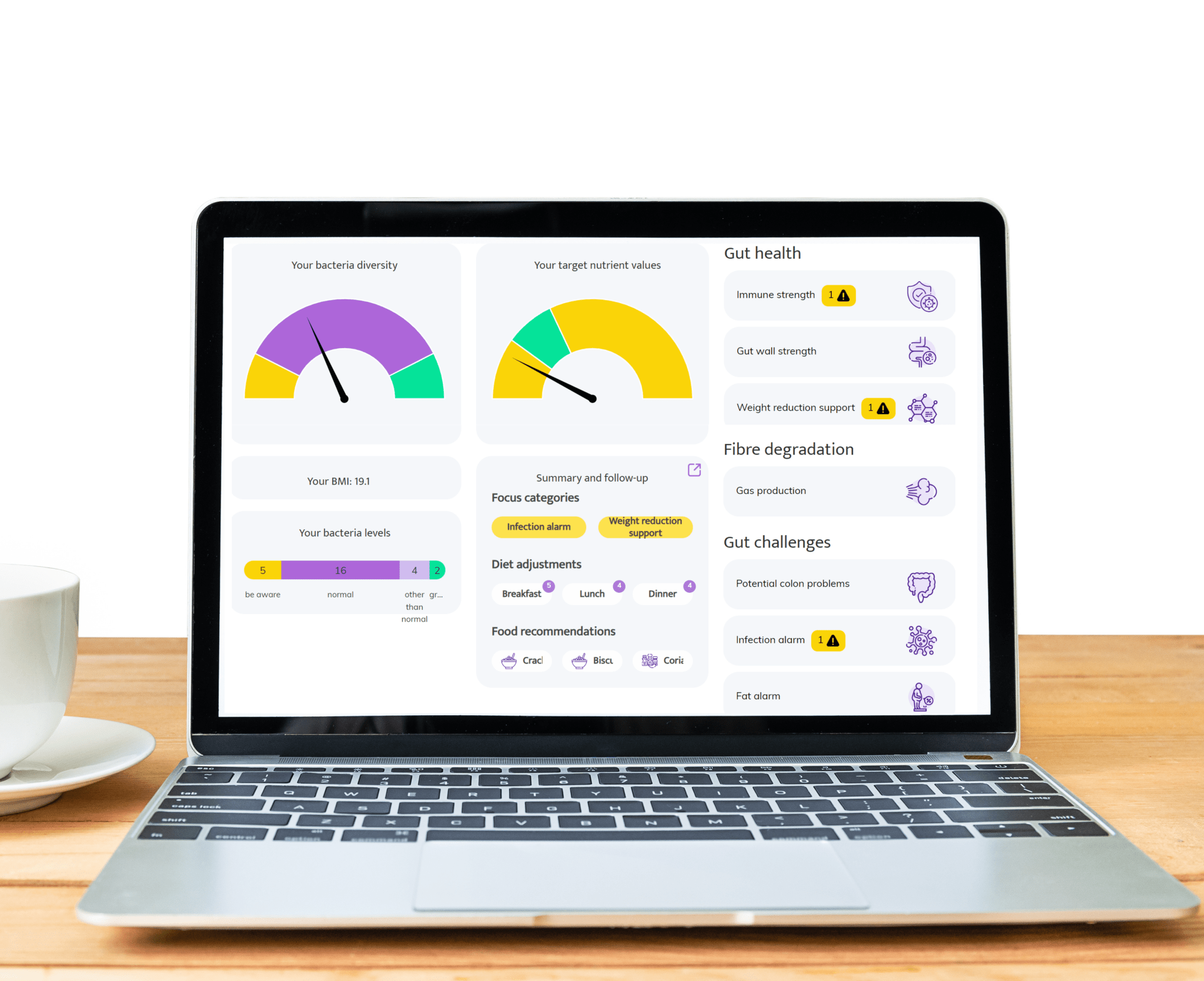
Full microbiome sequencing + Gut Health Index. Metabolic pathways, diversity, keystone species. Personalized plans available (diet, supplements, diary, recipes). EU lab + Maastricht University spin-off + GDPR-safe.