Understand gut microbiome test accuracy, limitations and results

Gut Microbiome Testing: Methods, Results and Limitations
What Gut Microbiome Tests Can—and Can’t—Tell You
Gut microbiome tests can describe some microorganisms or microbial genes found in a stool sample. They are not, by themselves, reliable diagnostic tools for most health conditions, and a result labelled “imbalanced” does not necessarily explain symptoms or tell you which treatment to use. Understanding how a test was performed, what it actually measured and what evidence supports its interpretation can help prevent misleading conclusions.
What Is the Gut Microbiome?
The gut microbiome is the community of microorganisms—including bacteria, viruses and fungi—and their genetic material in the digestive tract. This community interacts with diet, the immune system and the gut environment. Its composition varies between people, and there is no single profile that defines a healthy microbiome for everyone.
What Does a Stool Microbiome Test Measure?
Most consumer microbiome tests analyze microbial DNA in a stool sample. Depending on the method, a report may estimate which groups of microbes are present and their relative abundance, or identify a broader range of microbial genes. Some reports use these measurements to make claims about digestion, metabolism or general “balance.” Those claims require separate evidence: detecting DNA does not necessarily show that an organism is alive, active, causing symptoms or present elsewhere in the gut.
It is also important to distinguish consumer microbiome profiling from clinically validated stool tests. A targeted test ordered for a specific medical question—such as testing for a particular pathogen—may have established performance standards for that purpose. A broad sequencing profile is not interchangeable with such a diagnostic test.

How Accurate Are Gut Microbiome Tests?
There is no single accuracy score for all gut microbiome tests. A test may detect microbial DNA reproducibly while still having limited ability to identify organisms at a precise level, determine what they are doing or connect findings to a person’s health. Accuracy depends on the method, sample handling, laboratory procedures, analysis software and the specific claim being made.
Different Methods Provide Different Views
- 16S rRNA gene sequencing surveys selected regions of bacterial genetic material. It can provide a broad picture of bacterial groups, but may not reliably distinguish closely related species or strains. It generally does not provide the same functional information as broader sequencing methods.
- Shotgun metagenomic sequencing analyzes more of the genetic material in a sample. It can offer greater taxonomic and gene-level detail, but results still depend on sample quality, sequencing depth, reference databases and analysis choices. More detail does not automatically make a result clinically useful.
- Targeted clinical tests look for specific organisms or markers. Their reliability and intended use depend on the particular test and should be assessed against its validation and clinical purpose—not compared directly with broad consumer profiling.
Is There One Most Accurate Gut Microbiome Test?
No test is universally the most accurate for every question. The appropriate method depends on what is being measured and whether that measurement has been validated for the intended use. Before choosing a service, look for a clear description of its method, the organisms or markers it can detect, how it validates results and whether its health recommendations are supported by independent clinical evidence.
A detailed report, a high number of detected organisms or a proprietary “health score” should not be mistaken for proof that the test can diagnose a condition or guide effective treatment. Ask what a result can establish—and what it cannot.

Gut Microbiome Testing: Methods, Results and Limitations
Why Gut Microbiome Test Results Can Differ
A result is a snapshot of one sample analyzed using one laboratory’s procedures and interpretation system. Differences between tests, laboratories or samples collected at different times can reflect both genuine biological variation and technical variation. Without standardized methods and comparable reference ranges, a change on a report does not necessarily mean that a person’s health has changed.
Technical Sources of Variation
Collection and storage conditions can affect the microbial material available for analysis. Laboratories may use different DNA extraction procedures, sequencing platforms, quality controls and software. Reference databases are updated and vary in coverage, so the same sequence may be classified differently by different analytical pipelines. These factors can make results from separate services difficult to compare directly.
Sequencing also has limits. Some methods have difficulty distinguishing closely related organisms, while others may miss microbes that are rare or poorly represented in reference databases. A test that reports relative abundance shows the proportion of detected microbial material assigned to a group, not necessarily its absolute quantity. If one group’s proportion changes, other groups’ percentages can shift even when their absolute amounts have not.
Biological Changes Over Time
The gut microbiome can vary with recent meals, longer-term diet, medications such as antibiotics, illness and other changes in routine or environment. A single stool sample cannot show how stable a pattern is. A difference between two reports may therefore reflect sampling time or ordinary variation rather than a meaningful change requiring intervention.
Claims Versus Evidence
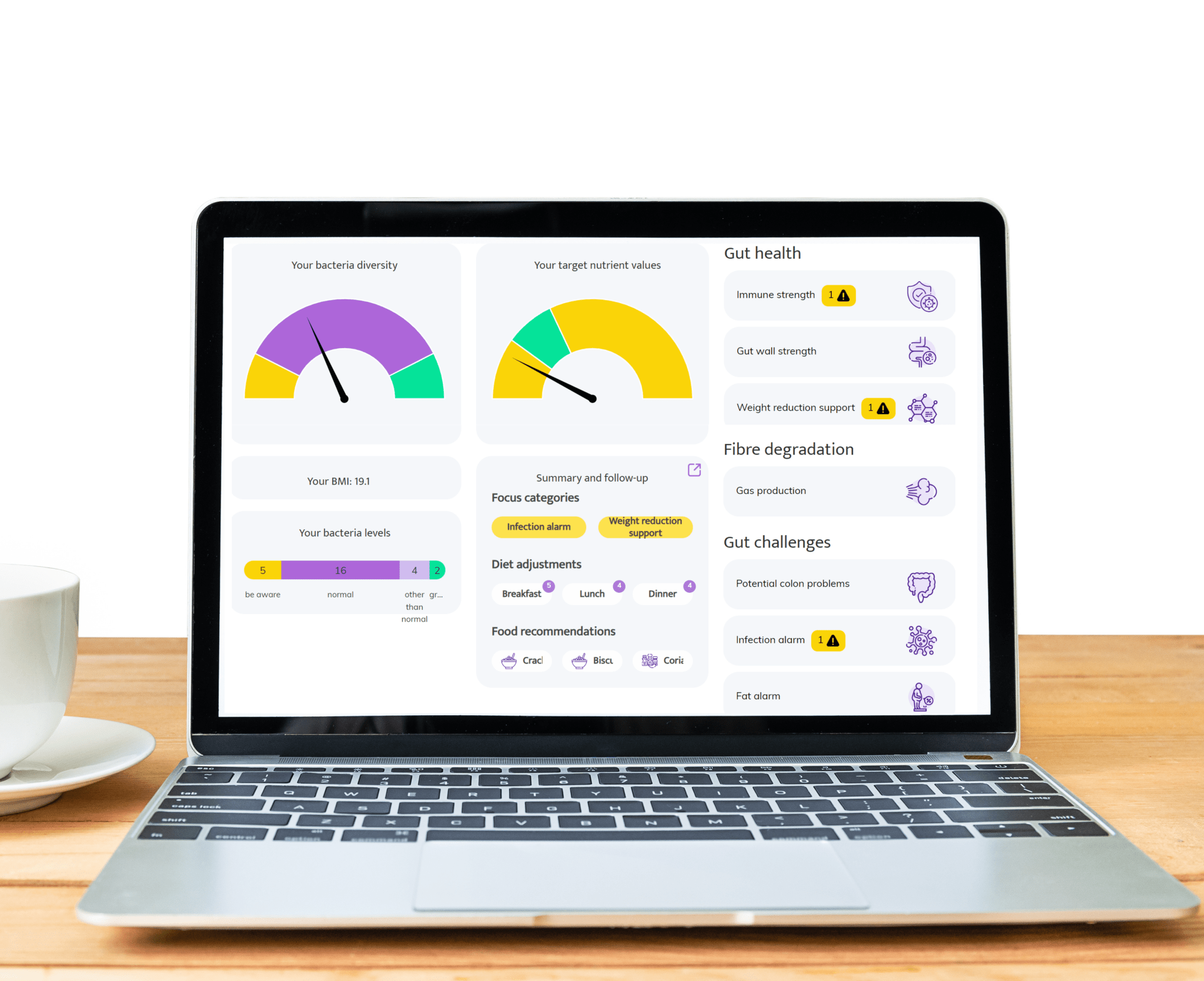
A detected bacterium is not automatically harmful, and a bacterium described as beneficial is not guaranteed to improve health. The presence of microbial DNA does not establish that a microbe caused a symptom. Likewise, a diversity score alone cannot determine whether a microbiome is healthy: diversity is one measure of community composition, not a complete assessment of function or health. Be cautious of reports that translate a complex profile into a definitive diagnosis, a guaranteed outcome or a specific supplement plan without appropriate clinical evidence.
Interpreting Results in the Context of Symptoms
A microbiome report should not be read in isolation. Symptoms, medical history, medicines, diet and the reason for testing all matter, and a broad sequencing result cannot replace a clinical assessment. If two reports conflict, first check whether they used the same type of test, laboratory, collection instructions, reporting units and reference ranges. If they did not, the numbers may not be directly comparable.
What Are Signs of Imbalanced Gut Bacteria?
There is no agreed set of symptoms that can reliably identify a specific microbiome imbalance. Digestive symptoms such as bloating, abdominal discomfort, diarrhea or constipation can have many possible causes and do not, by themselves, show which bacteria are involved. A commercial report should not be used to diagnose “dysbiosis” from symptoms or a score alone. Persistent, severe or concerning symptoms warrant discussion with a qualified healthcare professional, who can consider appropriate evaluation.
Is Bipolar Disorder Linked to Gut Bacteria?
Researchers are investigating possible associations between the gut microbiome and mental health, including bipolar disorder. An association does not show that gut bacteria cause the condition, that a microbiome test can identify it or that changing a test result will treat it. Bipolar disorder requires assessment by a qualified mental health professional; a consumer gut test is not a diagnostic tool and should not guide changes to prescribed treatment.
When a Microbiome Result May Be Useful
Microbiome profiling can be useful in research and may provide information about the sample measured. Its clinical usefulness for an individual depends on whether the finding has been validated for a specific decision. A result that is interesting biologically is not necessarily actionable in healthcare. Be particularly cautious when a report labels a common organism as a pathogen without confirmatory testing, or recommends restrictive diets, supplements or treatment based only on relative abundance.

What to Do With a Gut Microbiome Test Result
If you already have a report, use it as a prompt for careful questions—not as a diagnosis or a treatment plan. Consider these steps:
- Identify the test method and exactly what was measured. Check whether the report describes DNA detection, relative abundance, absolute quantity or a targeted clinical marker.
- Review the collection and storage instructions and whether they were followed. Note recent antibiotics, illness, major diet changes or other context that could affect the sample.
- Look for evidence behind each interpretation. Ask whether a finding has been validated for the health outcome or decision the report discusses, rather than relying on a score or marketing claim.
- Do not compare percentages from different companies as if they were measured on a shared scale. Different methods, databases and reference groups can produce results that are not directly comparable.
- Discuss concerning symptoms or confusing findings with a healthcare professional. They can help decide whether an established clinical test or other evaluation is appropriate.
- Avoid starting or stopping medication, taking antibiotics or making major dietary changes solely to alter a microbiome report. Seek professional guidance before significant changes, especially if you have a health condition or take prescribed medicines.
A Practical Standard for Trustworthy Interpretation
A useful report should explain its methods, limitations and uncertainty in plain language; distinguish measured data from interpretation; and avoid presenting a microbiome profile as proof of a diagnosis or a guaranteed path to better health. Stronger claims should be supported by independent, peer-reviewed evidence that applies to the specific test and intended use.
Gut microbiome testing can reveal information about a stool sample, but results vary and their meaning is often limited. The most reliable approach is to interpret findings cautiously, consider the method and context, and base health decisions on validated evidence and appropriate clinical advice.
Find more details about Microbiome Testing
You can find more information on the related topics below.
Read more about gut microbiome testing and how to interpret results
Your Gut Has a Story. Read It — Then Fix Potential Problems
Full microbiome sequencing + Gut Health Index. Metabolic pathways, diversity, keystone species. Personalized plans available (diet, supplements, diary, recipes). EU lab + Maastricht University spin-off + GDPR-safe.